

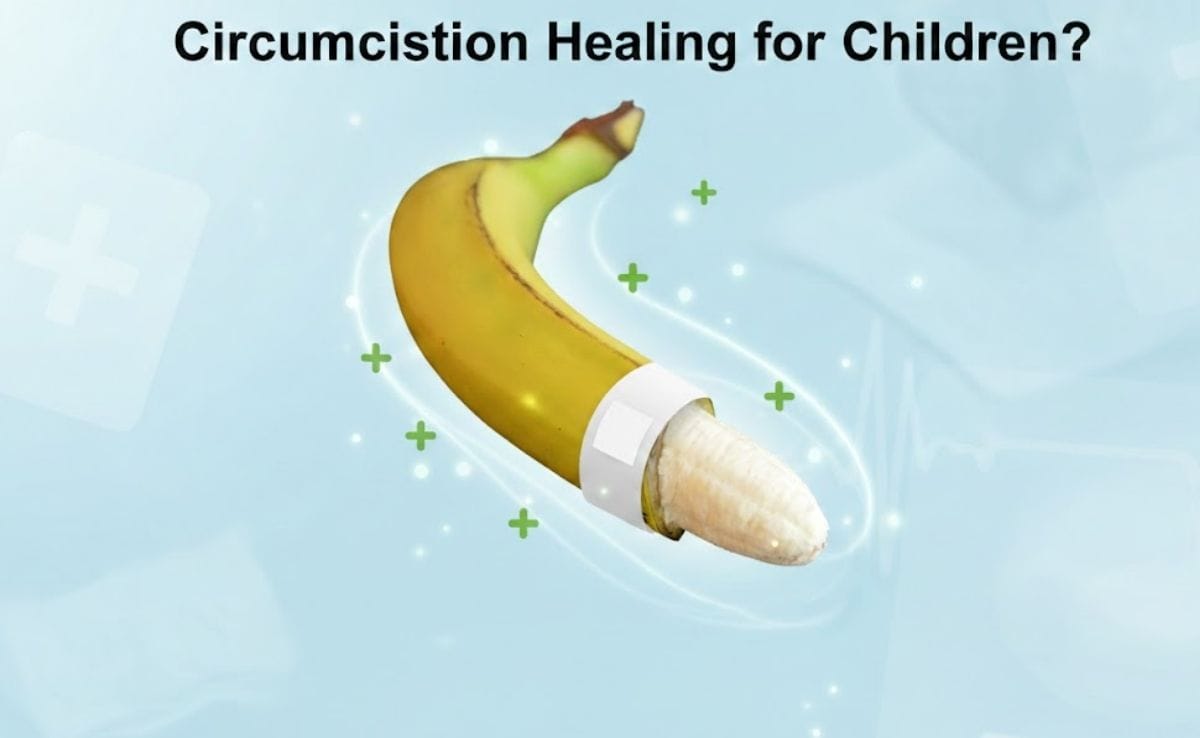
A child’s circumcision typically takes 10 to 14 days for the skin to close and four to six weeks for full internal tissue healing. Younger children heal faster than adults due to higher skin elasticity and stronger blood circulation. At He Medical Clinic, we offer medically supervised circumcision services for kids that report smoother recovery, fewer complications, and better scar quality.
Circumcision Healing Timeline Overview
After circumcision, the body repairs the skin in stages. The surface skin closes first, usually within the first two weeks. During this time, swelling and tenderness slowly reduce. Under the surface, deeper layers of tissue continue to strengthen for several more weeks.
Keeping the area clean, limiting friction, and following aftercare instructions help new skin form evenly. Children who receive proper aftercare often heal faster, have less swelling, and develop smoother scars.
Factors that Determines Circumcision Recovery Time in Children

Age And Skin Regeneration Speed
Infants and young children regenerate skin cells faster. Collagen production peaks in early childhood, allowing wounds to seal and strengthen more efficiently than in adolescents.
Method of Circumcision
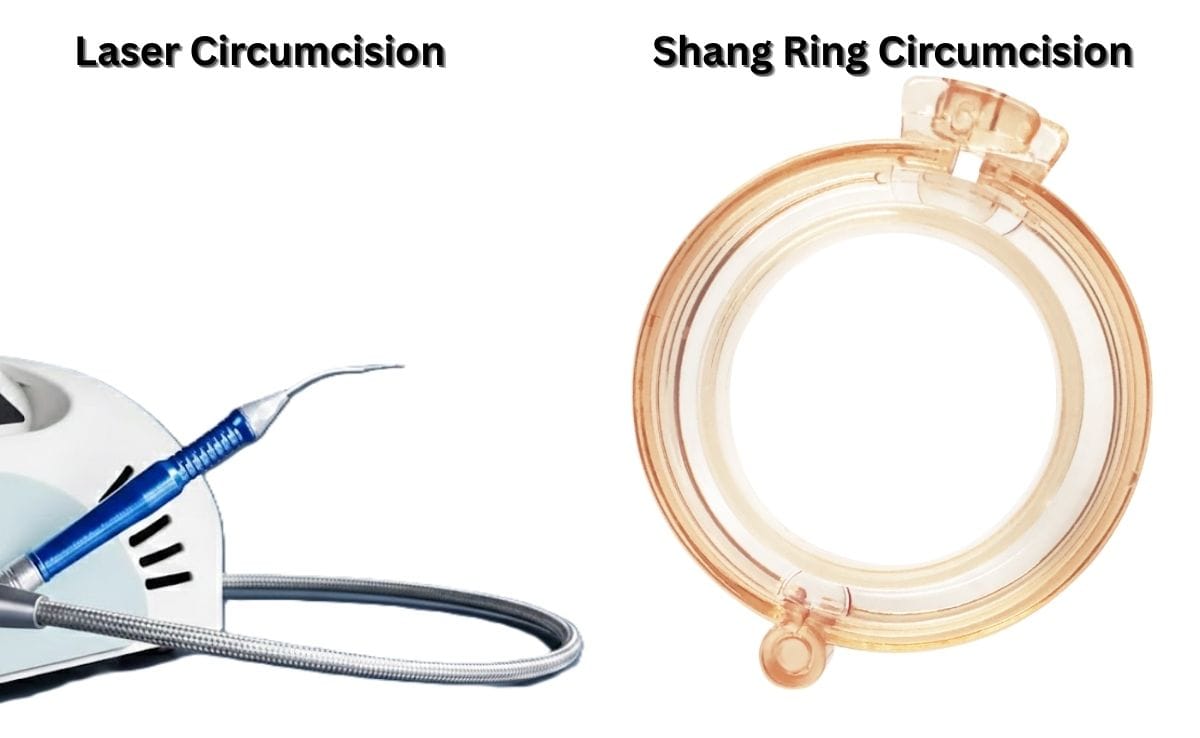
Laser Circumcision
Laser circumcision seals blood vessels during incision. This limits inflammation and swelling, allowing most children to resume normal play within a few days. Laser techniques also reduce scar thickness and pigmentation changes.
Shang Ring Circumcision
Shang Ring circumcision uses gentle compression instead of sutures. The ring remains in place for about seven days and then is removed. Healing is often smoother because the wound edge remains sealed throughout early recovery.
Day-by-Day Healing Timeline
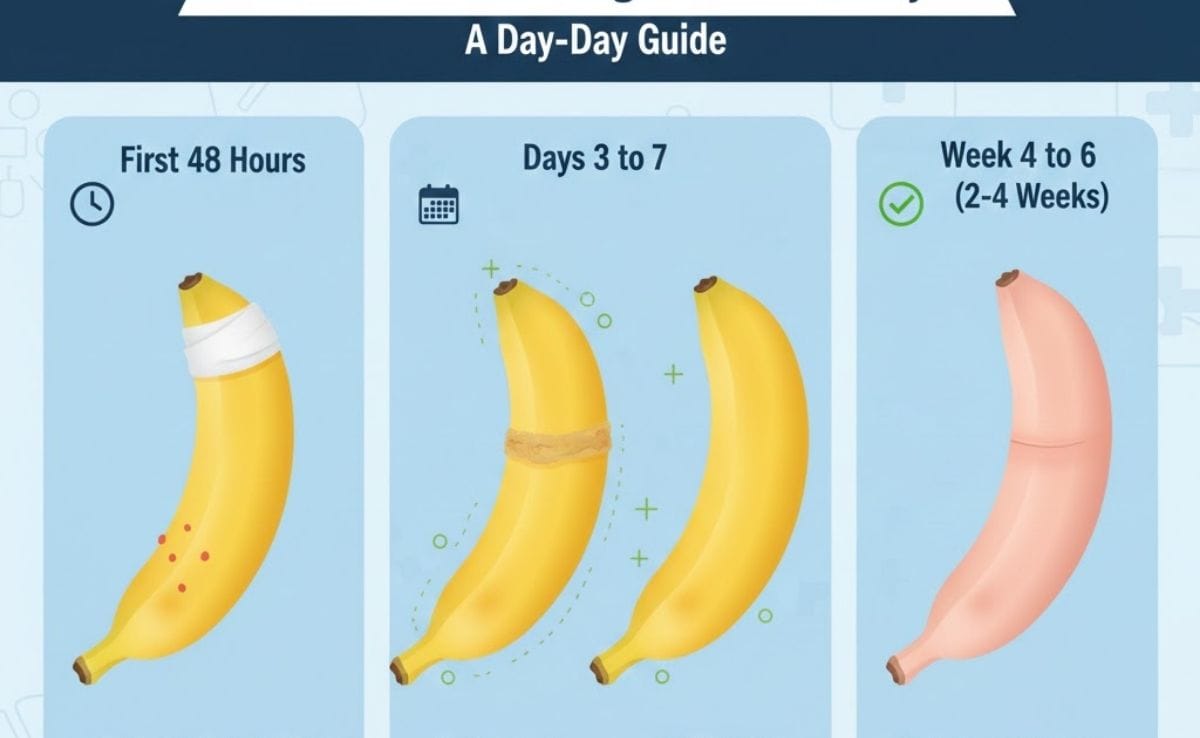
First 48 hours
Mild swelling, redness, and light spotting may appear. Cold compress therapy helps control swelling. Pain usually responds well to paediatric analgesics.
Days 3 to 7
Scabs form, and itching begins as nerve endings regenerate. Saline cleansing keeps the wound clean. Bathing becomes safe when approved by the clinician.
Week 2 to 3
The incision line strengthens. Swelling decreases noticeably. Children can return to school and light activities comfortably.
Week 4 to 6
Scar tissue matures and skin elasticity returns. Sensitivity stabilizes and full healing completes.
How to Heal a Circumcision Wound Faster in Children

Medical Wound Hydration
A circumcision wound heals faster when it stays slightly moist rather than dry. A thin layer of doctor-approved healing ointment keeps the new skin soft, prevents hard scabs from forming, and lowers the risk of cracking and bleeding. Soft healing surfaces allow skin cells to move across the wound more easily, which shortens healing time and reduces scarring.
Hygiene Science For Young Patients
Gently rinsing the area with clean saline or plain water removes dried blood and bacteria without damaging new skin. Harsh soaps, wipes, or perfumed products can irritate healing tissue and delay closure. Keeping the wound clean without scrubbing helps the skin seal naturally.
Clothing And Swelling Control
Loose cotton underwear limits rubbing against the wound. Less friction means less swelling, less discomfort, and lower risk of the wound reopening. Good airflow also keeps the area dry, which reduces the chance of skin infection.
Nutrition And Hydration
Healing skin needs protein, vitamins, and fluids to rebuild properly. Meals with eggs, dairy, fish, chicken, beans, fruit, and vegetables provide the building blocks for new tissue. Drinking enough water supports blood flow, helping oxygen and nutrients reach the healing area faster.
Activities to Avoid During Recovery
Running, Jumping, and Contact Sports
High-impact movements increase pressure in the groin area. This stretches healing skin, increases swelling, and can reopen the incision. Sports and rough play should be avoided until the doctor confirms full skin closure.
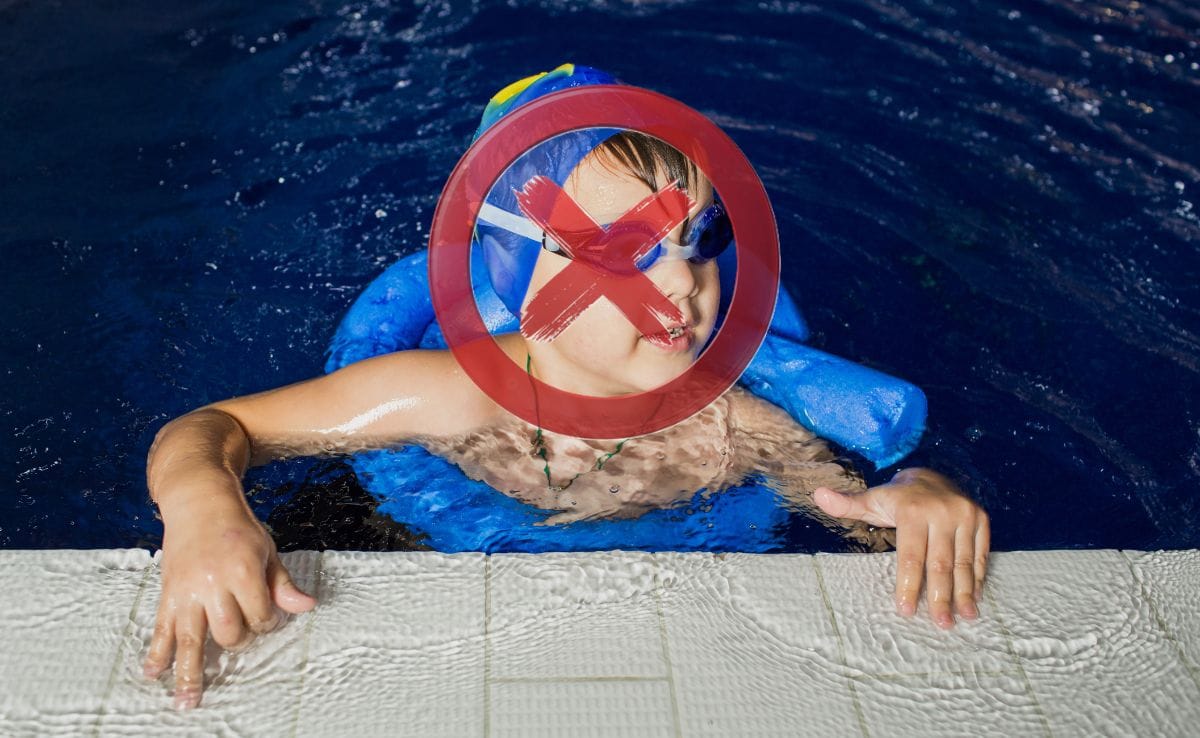
Swimming and Soaking In Water
Pools, hot tubs, baths, lakes, and the sea expose the wound to bacteria. Soaking also softens healing skin, making it easier for the incision to reopen. Water activities should wait until the wound is fully sealed.
Scratching or Touching The Wound
Itching is part of normal healing, but scratching can tear new skin and cause bleeding or infection. Hands should be kept clean and the area should only be touched during cleaning or dressing changes.
What Is Normal vs When to Seek Care
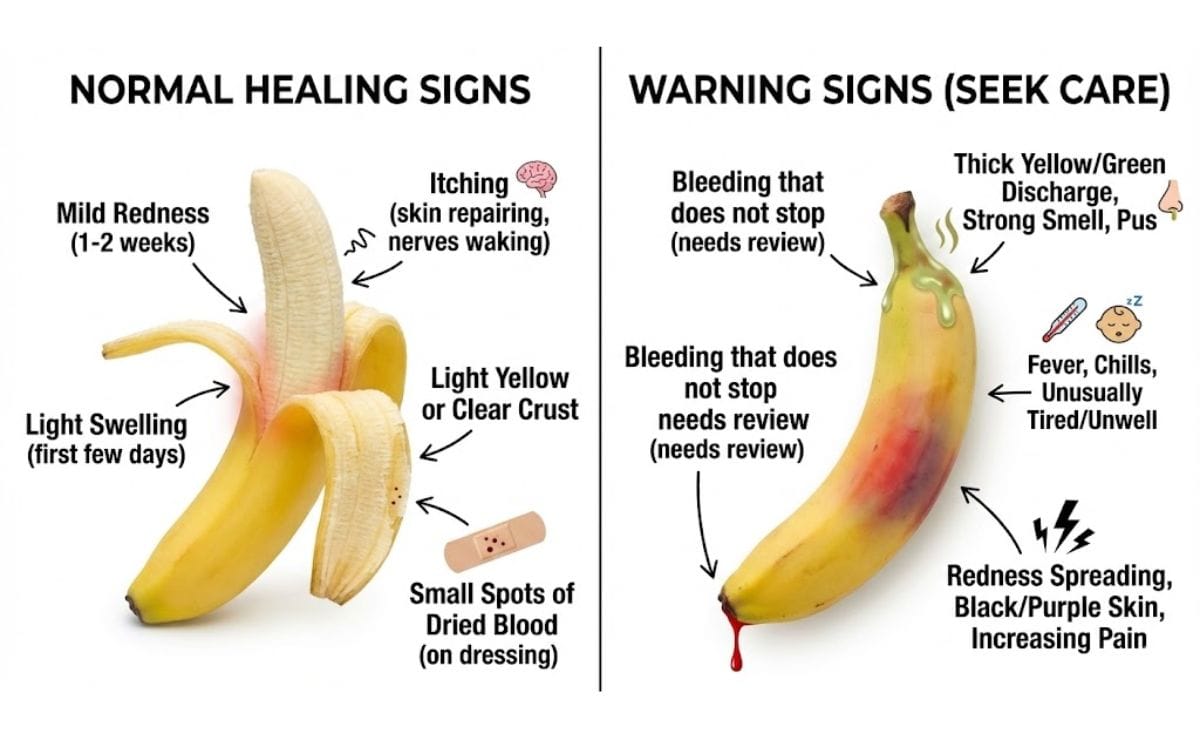
Normal Healing Signs
Mild redness around the incision is expected during the first one to two weeks. Light swelling often appears during the first few days and then slowly settles. Itching means the skin is repairing itself, and nerve endings are waking up. A light yellow or clear crust can form along the cut edge and is part of the normal healing process. Small spots of dried blood may also be seen on the dressing or underwear.
Warning Signs
Bleeding that does not stop after gentle pressure needs medical review. Thick yellow or green discharge, a strong, unpleasant smell, or pus can point to infection. Fever, chills, or a child who becomes unusually tired or unwell should be checked by a doctor. Redness that spreads away from the wound, black or purple skin, or increasing pain instead of improvement can signal a healing problem and require prompt medical attention.
Why Professional Aftercare Matters for Children
Paediatric circumcision aftercare services include wound monitoring, scar modulation therapy, and infection prevention protocols. Medical supervision reduces complication risks and supports faster recovery.