
Platelet-rich plasma therapy has been quietly gaining ground in men’s sexual health clinics for several years, and the conversation around it is growing. For men who haven’t responded well to conventional options, or who want to address the root cause of erectile dysfunction rather than manage symptoms, PRP treatment represents a genuinely different approach.
But with any emerging therapy, the right questions matter. What is PRP treatment, exactly? How does the PRP procedure work in practice? And most importantly — does the evidence support it?
This guide covers all of it: the science, the process, who it’s best suited for, and what realistic expectations look like.
What Is PRP Treatment?
PRP stands for platelet-rich plasma. To understand how it works, it helps to know what platelets actually do. Platelets are components of your blood that play a central role in healing — when tissue is damaged, platelets rush to the site and release growth factors that stimulate repair, regeneration, and the formation of new blood vessels.
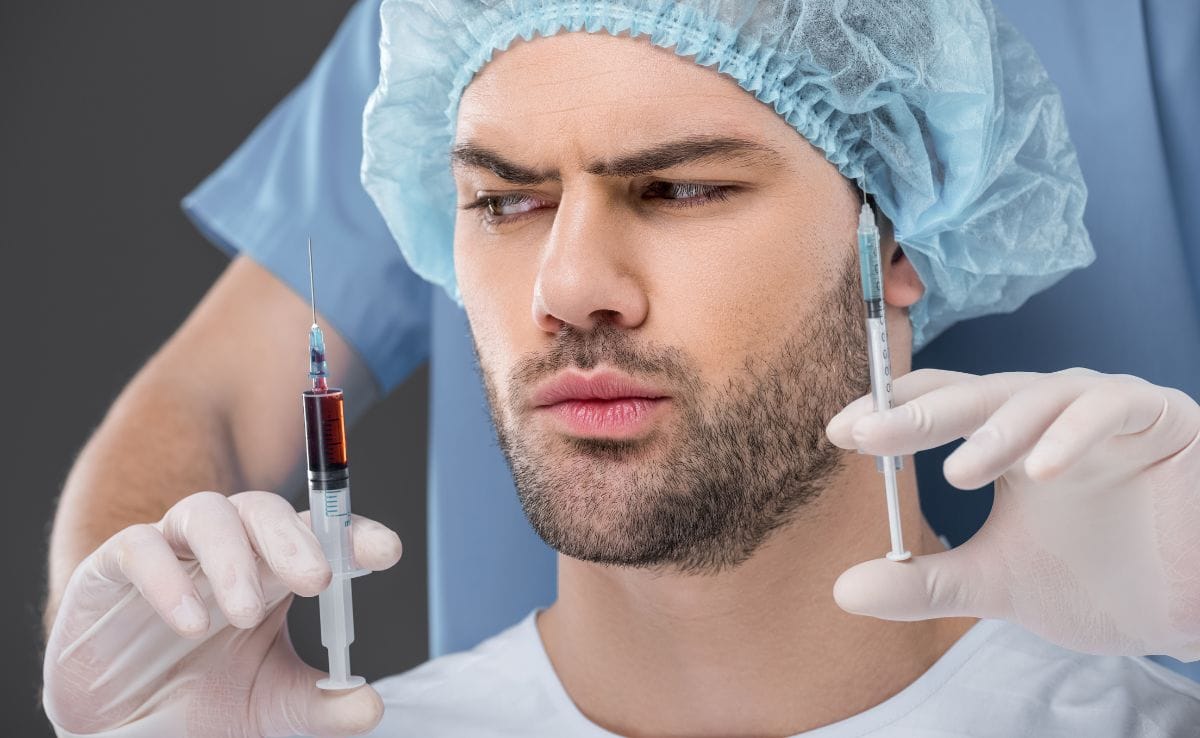
Platelet-rich plasma is simply a concentrated version of your own plasma, drawn from a blood sample and processed to isolate and amplify those platelets. When injected into a targeted area, the concentrated growth factors accelerate the body’s natural repair mechanisms far beyond what occurs in normal healing.
PRP has been used in orthopaedics, dermatology, and sports medicine for decades. Its application to erectile dysfunction is more recent, but it follows the same biological logic: poor erectile function is frequently a vascular problem, and PRP is a regenerative therapy designed to restore and build new vascular tissue.
How Does the PRP Procedure Work?

The process is straightforward and is carried out entirely in-clinic. A small amount of blood is drawn from your arm, in the same way as a routine blood test. That sample is then placed in a centrifuge, which spins it at high speed to separate the plasma and concentrate the platelets. The resulting PRP solution is then prepared for injection.
The PRP injection is administered directly into the erectile tissue of the penis, typically the corpora cavernosa — the two cylindrical chambers that fill with blood during an erection. A topical anaesthetic is applied beforehand, so discomfort is minimal. The procedure itself takes around 30 to 45 minutes from start to finish, with no downtime required afterward.
Most men undergo a series of treatments, typically two to three sessions spaced several weeks apart, to allow the growth factors to take effect and for new tissue remodelling to occur. Results are not immediate — the biological processes being stimulated take time — but changes generally become more apparent over the weeks following each session.
The Science Behind PRP for Erectile Dysfunction
The theoretical basis for PRP treatment in ED is well grounded. Erectile dysfunction is, in a large proportion of cases, a vascular condition. The penile tissue loses its ability to receive adequate blood flow — either because arteries have narrowed, because the smooth muscle tissue within the corpora cavernosa has become fibrotic, or because the microvascular network has deteriorated over time.
PRP targets this directly. The growth factors released by concentrated platelets — including vascular endothelial growth factor (VEGF), platelet-derived growth factor (PDGF), and transforming growth factor (TGF) — promote angiogenesis (the formation of new blood vessels), stimulate smooth muscle regeneration, and encourage neural repair in the penile tissue.
In clinical terms, this means PRP is not just managing the symptoms of erectile dysfunction. As a regenerative therapy, it is working at a tissue level to address the physiological changes that caused the problem in the first place.
What Does the Evidence Say?

The research on PRP for erectile dysfunction is still accumulating, and it’s worth being transparent about that. This is not a therapy with decades of large-scale randomised controlled trials behind it. What exists is a growing body of smaller studies and clinical data that is, broadly speaking, encouraging.
Several published studies have reported significant improvements in erectile function scores, spontaneous erections, and reduced reliance on PDE5 inhibitors (such as Viagra or Cialis) following PRP treatment. Men with mild to moderate vascular ED have shown the most consistent responses. Some studies have also explored PRP as a rehabilitative tool for men who have undergone prostatectomy, with promising early results.
The consensus among clinicians who work in this space is that PRP is a legitimate option within a broader treatment framework, particularly for men who have not found adequate relief with oral medications alone, or who are seeking a more long-term, regenerative approach.
Evidence Area | Current Picture |
Mild to moderate vascular ED | Most consistent positive outcomes reported |
Post-prostatectomy ED | Early studies show promise; more data needed |
ED unresponsive to PDE5 inhibitors | Positive results in several clinical reports |
Psychological ED | Limited evidence; not the primary indication |
Severe vascular or neurological ED | Response less predictable; manage expectations |
Who Is PRP Treatment Best Suited For?

PRP is not the right fit for everyone, and a thorough clinical assessment is what determines whether it’s appropriate for any individual. That said, certain profiles tend to respond best.
Men with mild to moderate vascular erectile dysfunction — where the underlying issue is reduced blood flow rather than complete vascular occlusion or nerve damage — are the strongest candidates. Men who have found oral medications helpful but insufficient, or who want to reduce their long-term reliance on medication, are also well suited. The same applies to men who are interested in a natural, drug-free approach, since PRP uses the body’s own biological material.
Men with severe arterial disease, uncontrolled diabetes, active infection, or blood disorders that affect platelet function are generally not suitable candidates. This is why assessment comes first.
Patient Profile | Likely Suitability |
Mild to moderate vascular ED | Good candidate |
ED partially responsive to oral medications | Good candidate |
Seeking drug-free or regenerative approach | Good candidate |
Post-prostatectomy ED (nerve-sparing surgery) | Potentially suitable; assess individually |
Severe vascular disease or complete arterial occlusion | Less likely to respond |
Active infection or platelet disorder | Not suitable |
Psychological ED without vascular component | PRP not the primary recommendation |
How Does PRP Compare to Other ED Treatments?
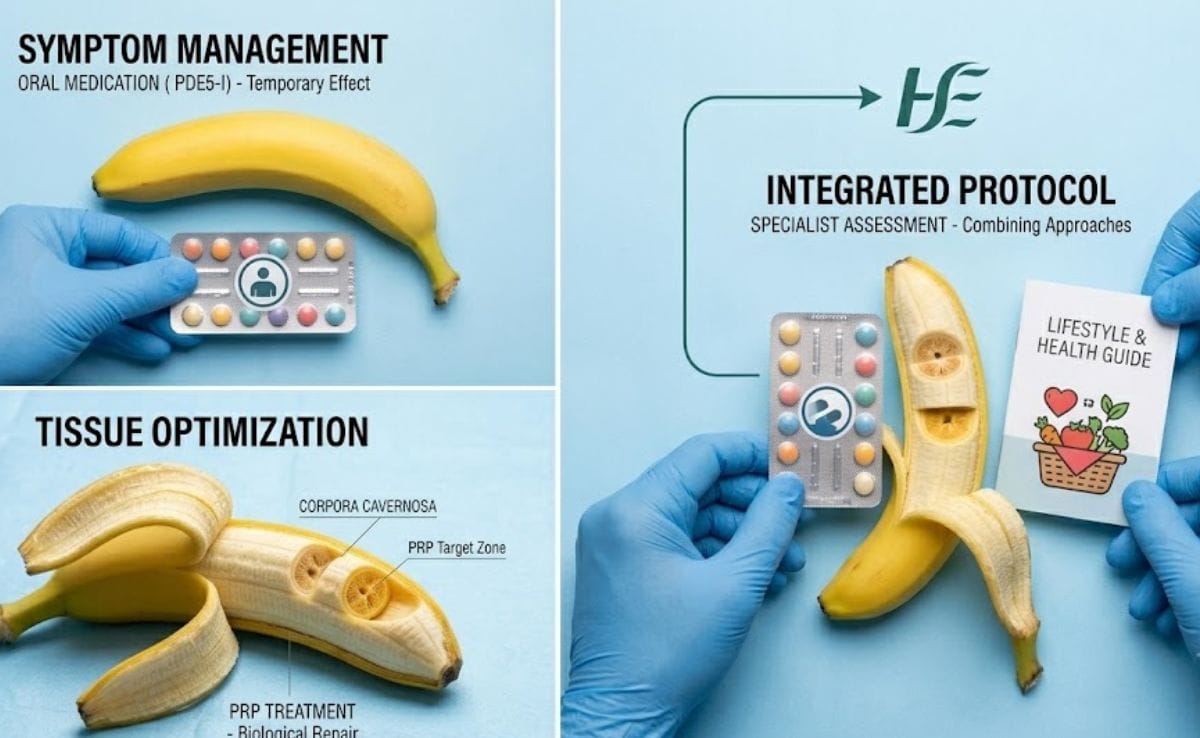
PRP treatment sits within a broader landscape of ED treatment options. Understanding where it fits helps set realistic expectations and allows for informed decision-making.
Oral medications like PDE5 inhibitors work by increasing blood flow in the moment, but they don’t change the underlying tissue condition. PRP takes a different approach entirely. Rather than managing symptoms, it works at a biological level to stimulate tissue repair and new blood vessel growth in the penile tissue, targeting the vascular changes that contribute to erectile dysfunction over time.
For many men, the most effective outcome comes from a combination protocol. Oral medication provides immediate relief, while PRP treatment addresses the vascular root cause over time, supported by lifestyle changes that benefit cardiovascular health overall. This is not a one-size-fits-all field, which is precisely why a specialist assessment matters.
What to Expect After a PRP Procedure
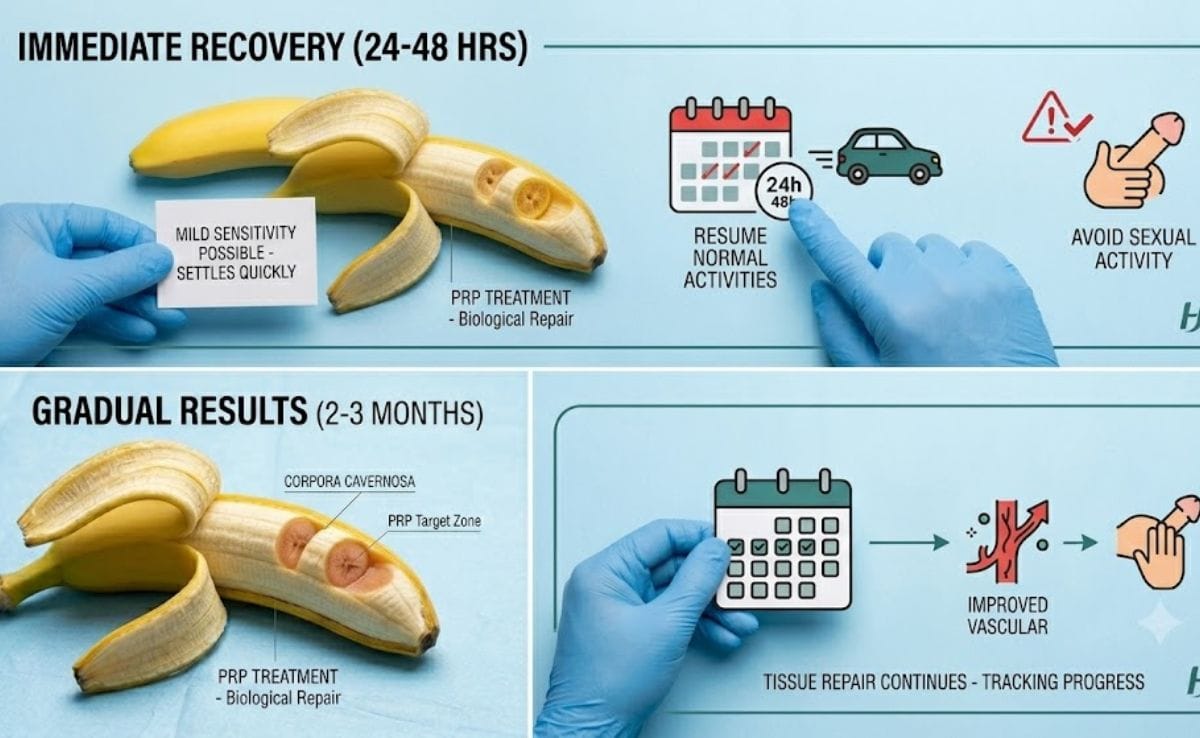
Most men resume normal activities the same day. Some mild swelling or sensitivity in the treated area is possible in the first 24 to 48 hours, but this typically settles quickly. Sexual activity is generally advised to be avoided for a short period following each session, as directed by the treating clinician.
Improvements are gradual. Some men notice changes within a few weeks; for others, the full benefit becomes apparent over two to three months following a complete treatment course. Follow-up assessments are important for tracking progress and determining whether additional sessions would be beneficial.